
Regenerative farm · Burgoyne Valley, Salt Spring Island
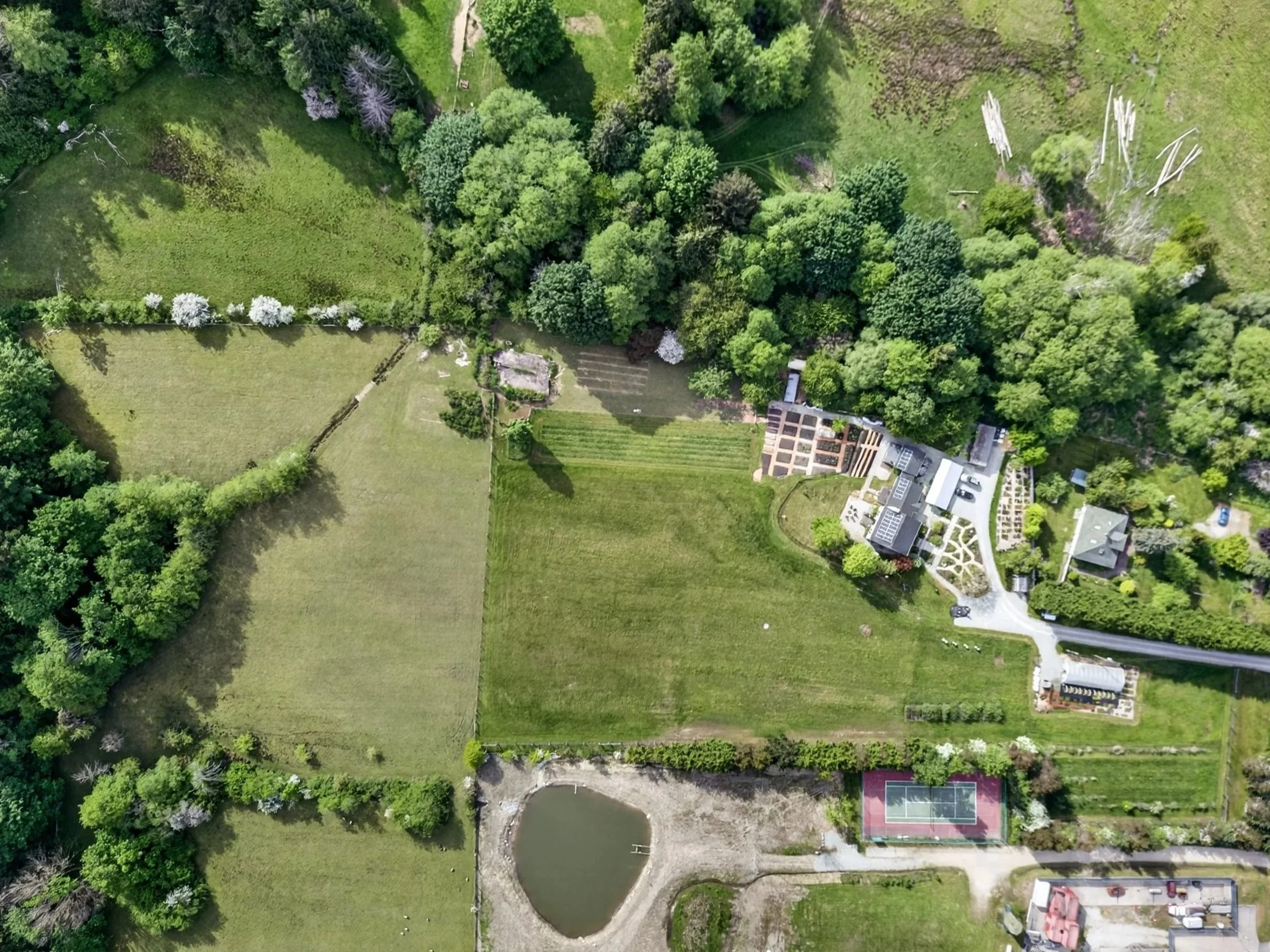
Thirty acres, farmed regeneratively
Glenraven is in the Burgoyne Valley at the foot of Mt Bruce, which shades the farm for most of the winter. Alongside the nursery there's pasture, a hay meadow, orchard trees, woodland, a market garden, an asparagus field, blueberries, basket willow, two glass greenhouses and a poly tunnel.
How we farm
Soil first, and no sprays
Everything here is farmed regeneratively. We don't till or dig; compost and mulch go on top and the soil life does the rest. We don't use pesticides, herbicides or neonics anywhere on the farm. The birds and pollinators that live here mean the world to us, and we farm to protect them.
No till, no dig
Beds are fed from the top with compost and mulch, never turned.
No sprays
Birds, ladybugs and dragonflies handle most pests. Insecticidal soap is a last resort.
Peat-free pots
Nursery plants grow in a mostly bark-based mix with a slow-release feed, and nothing else.
Plants that suit the site
If a plant can't handle our wet winters and dry summers, we stop growing it.
The land
Pasture, hay and animals
Most of the farm is pasture and hay, grazed and rested in turn. Nothing is sprayed and nothing is ploughed. The animals do much of the work of keeping the fields healthy.
Hay
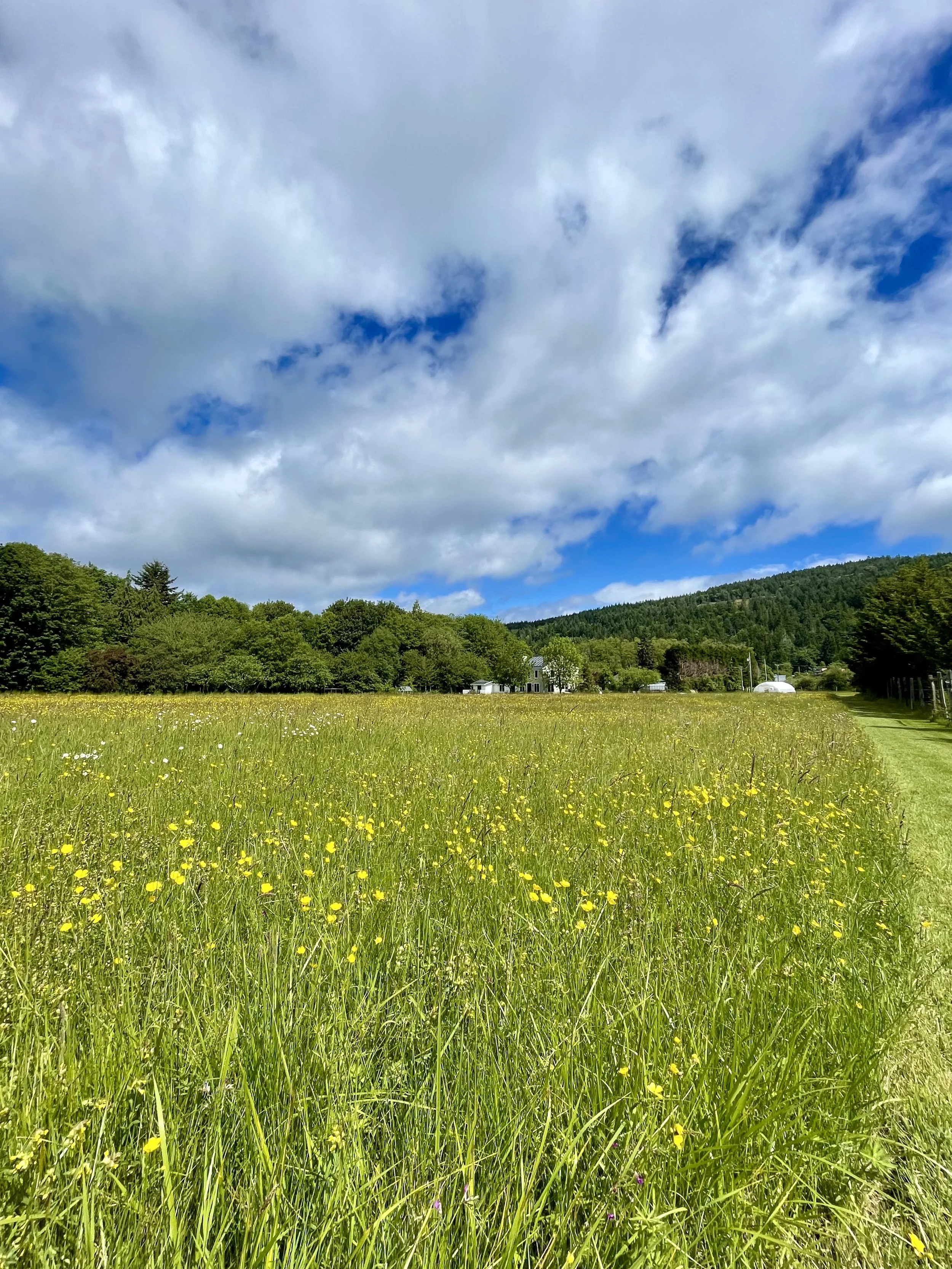
One field is left to grow tall until midsummer, then cut for hay.
Sheep
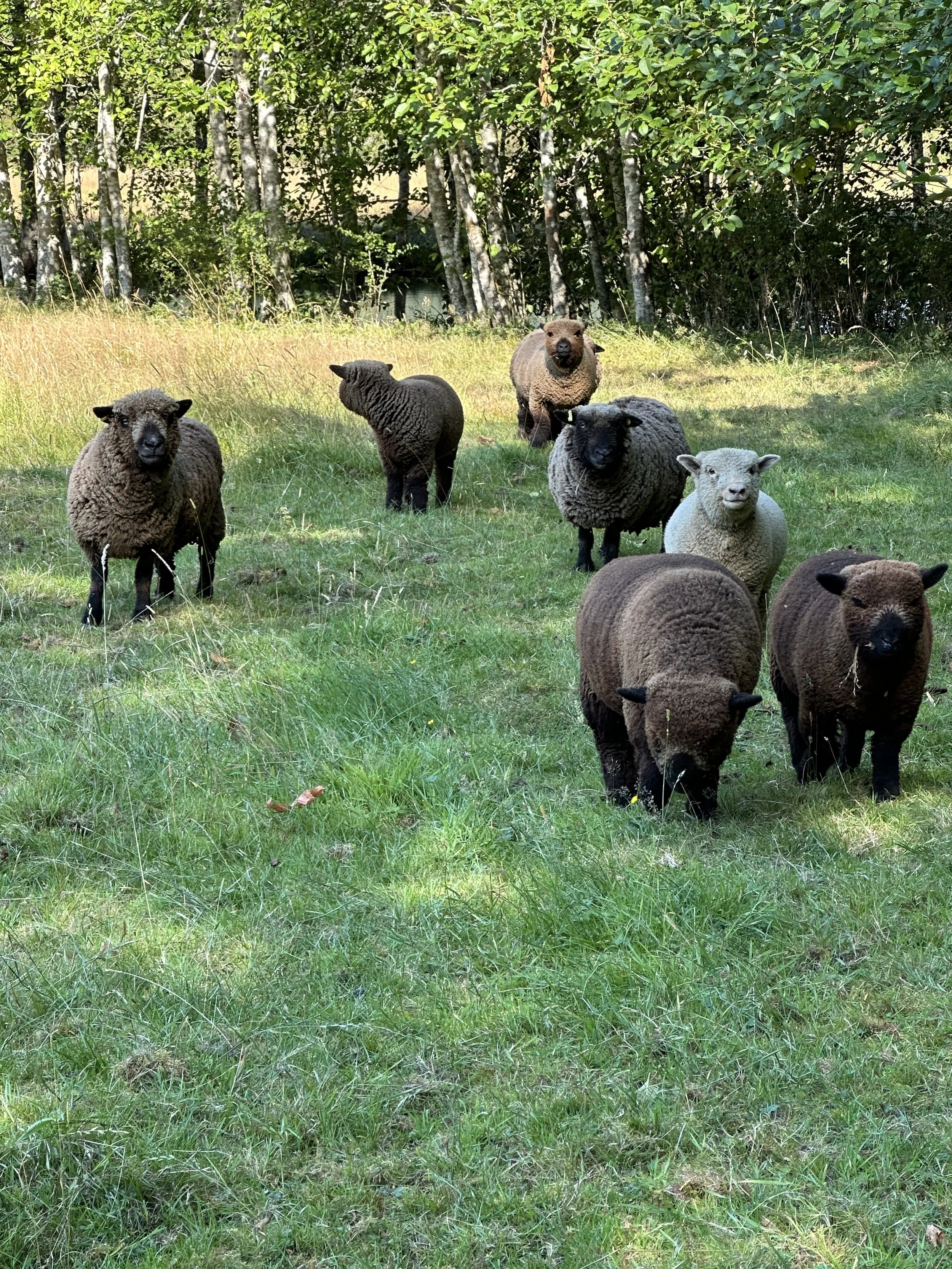
The sheep graze all of the pastures through the growing season, and the hay field once it's cut. From spring 2027 they'll move every few days inside electric netting, so each patch gets time to rest and regrow.
Heritage chickens
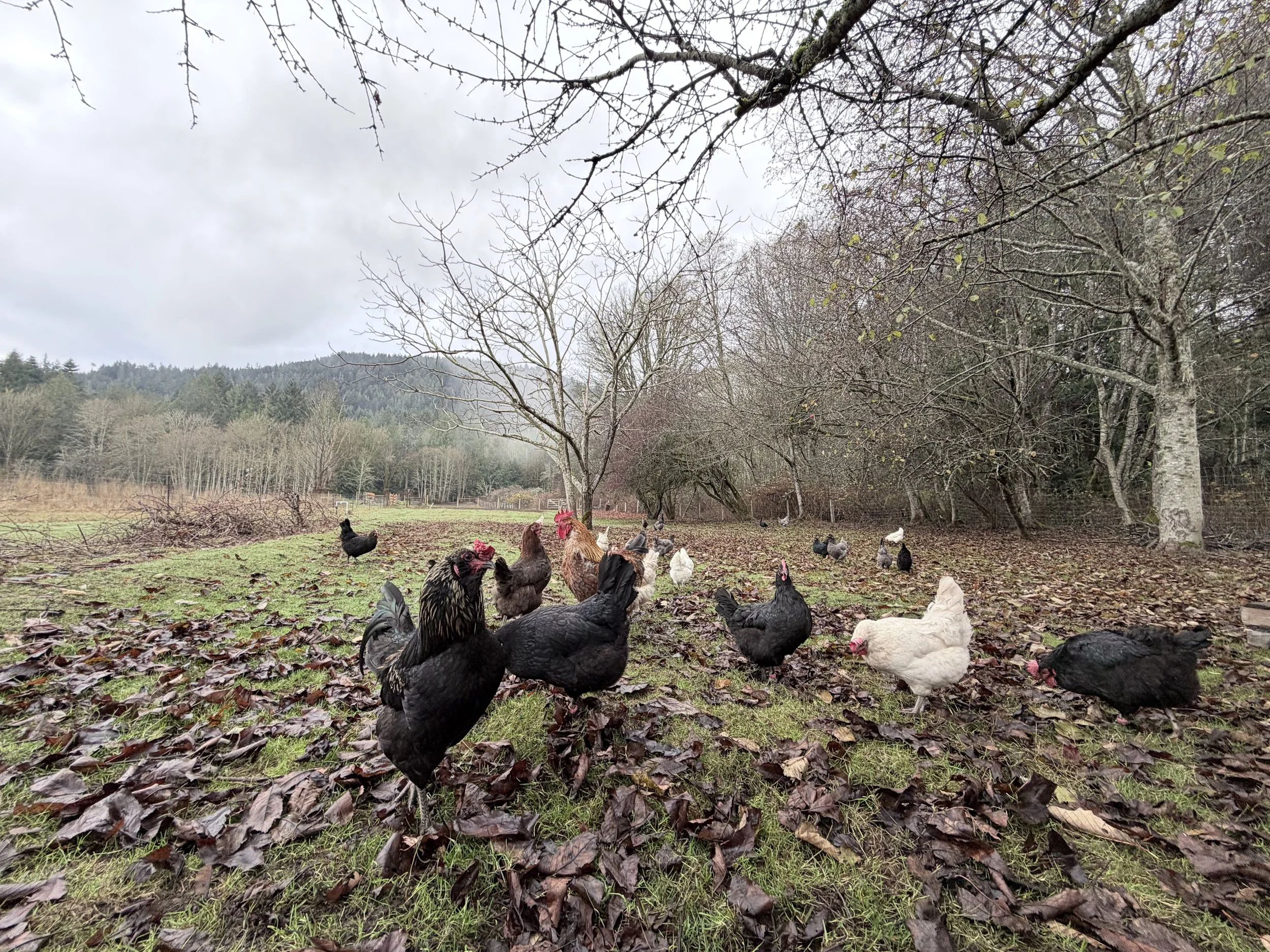
Our hens and roosters truly free-range. They can go anywhere on the farm except the gardens, and they follow the sheep, scratching apart the manure and spreading it across the pasture as they go.
Water
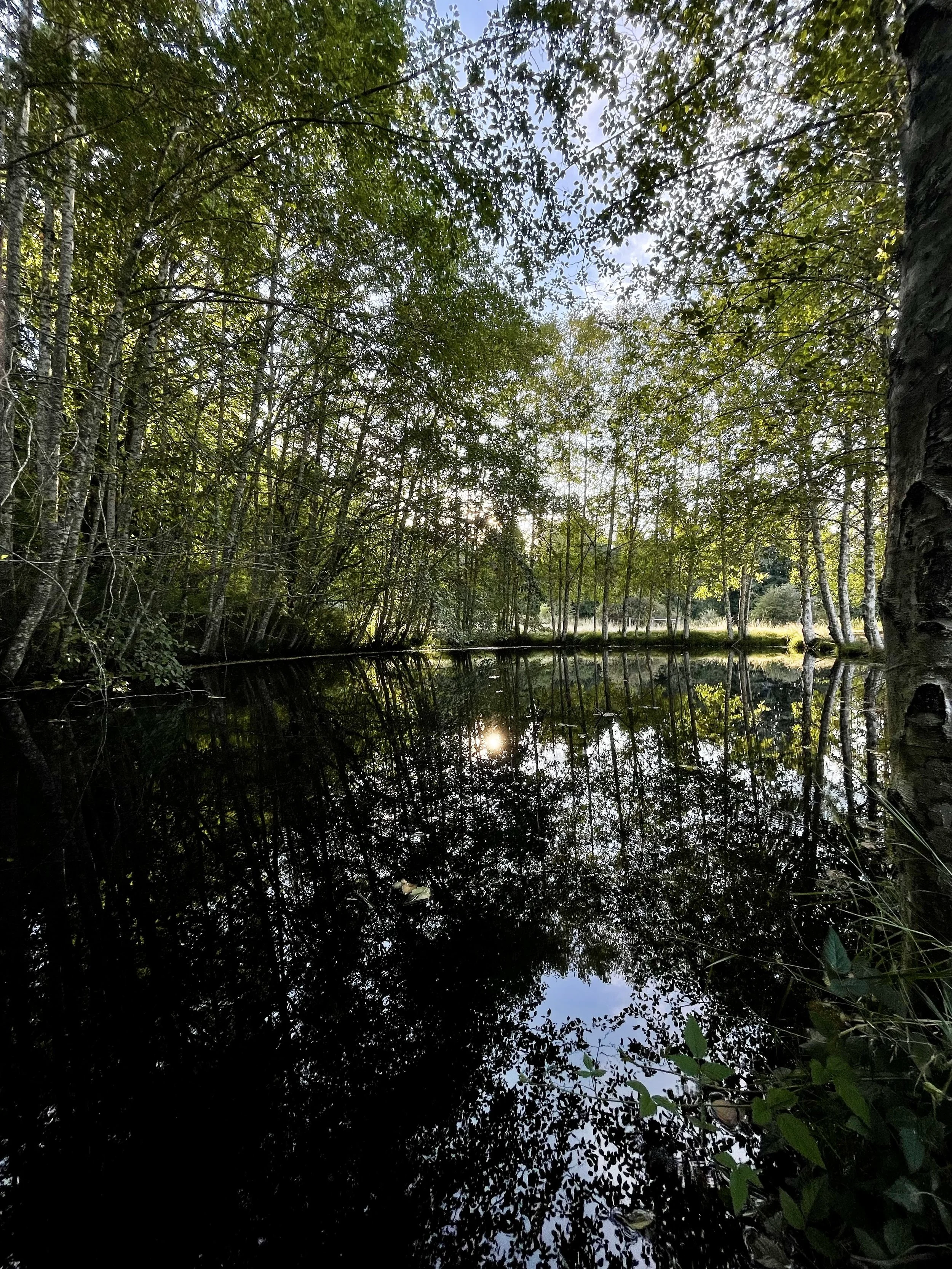
Water runs off Mt Bruce into the valley all winter, and there's plenty of it. Our pond collects it, and we use it to water the nursery through the dry months.
TREES, FLOWERS AND BEES
Plenty for the bees
Old field maples, viburnum, the wild roses in the fields, and cherry, pear, apple, crabapple, walnut and plum trees around the farm are all well loved by the bees, and the nursery and display gardens keep them busy through summer. This year they also have new redbuds and Amelanchier along the lane, with the laneway garden beneath them.
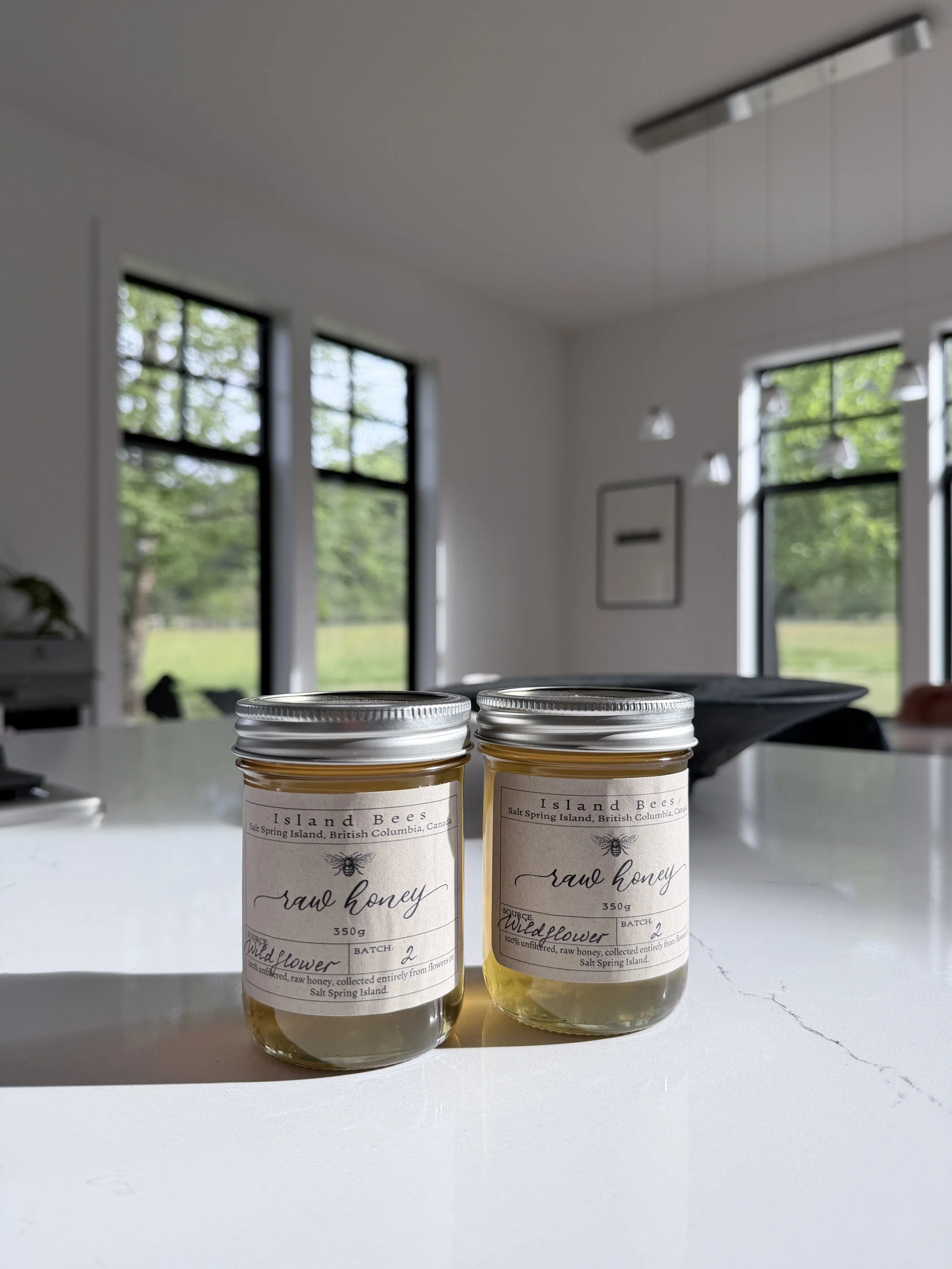
Honey and nucs from the hives here are sold by Island Bees, the honey raw and in small batches. You'll find it at Country Grocer and Natureworks on Salt Spring.
Market garden and orchard
Food, too
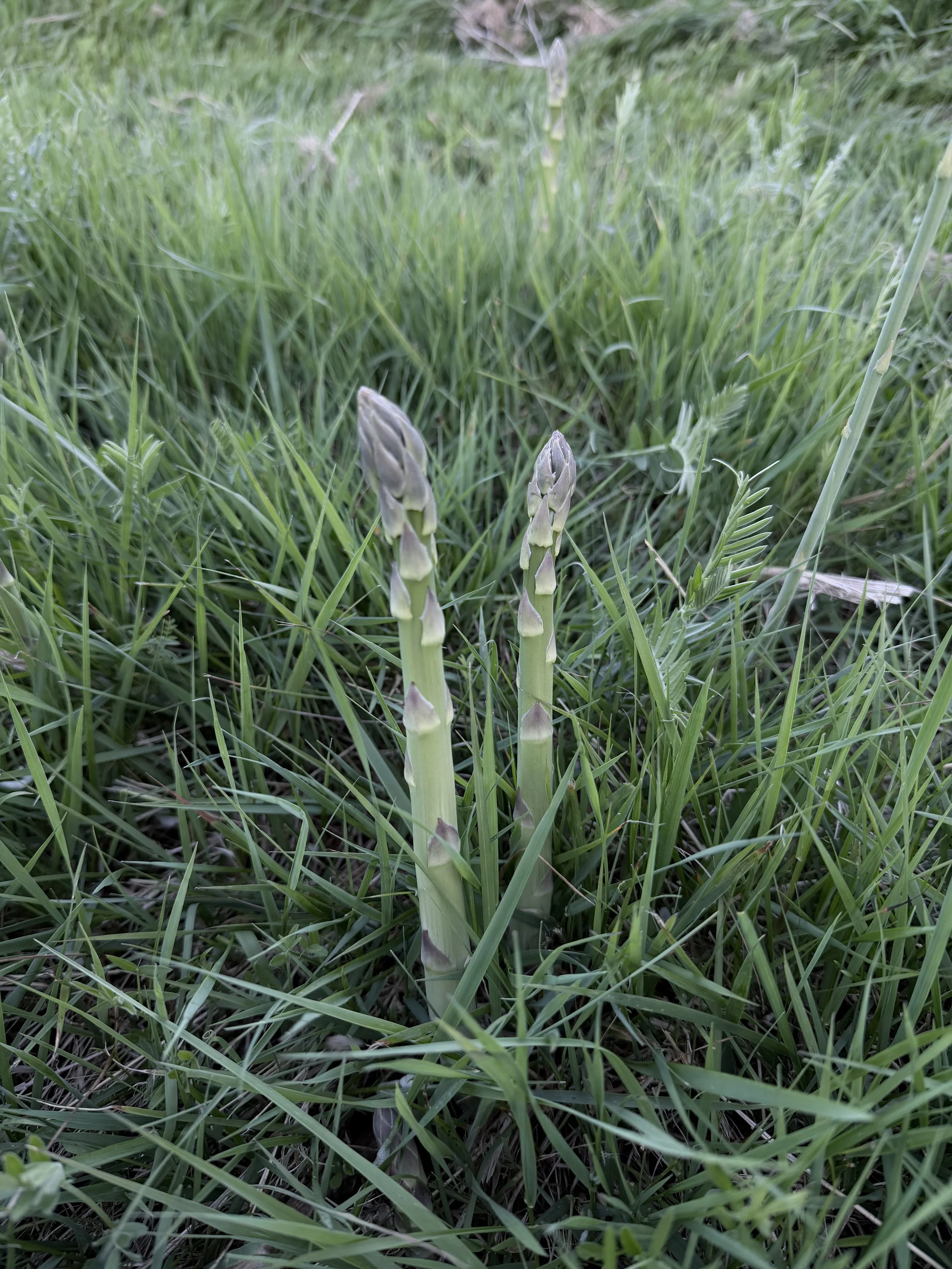
We grow garlic, tomatoes, peppers, eggplant, kale, chard, salads, potatoes, rhubarb and a good range of herbs. The asparagus field gives one of the first harvests of spring, and is prized by the island's restaurants and chefs. Fruit and nuts follow through summer and fall: cherries, blueberries, blackberries, plums, figs and apples, then walnuts and hazelnuts.
Basket willow
Fresh willow for weavers
We grow eighteen varieties of basket willow. We don't have space to dry it, so we sell it fresh in spring: green rods for weaving, and cuttings for planting your own.
Cuttings
$3 each, or $2.25 each for 45 or more
Green rods
$10 a pound
Salix purpurea ‘187’
Salix ‘Packing Twine’
Salix ‘Green Edna’
Salix ‘Koch Brown’
Salix ‘Streamco’
Salix ‘Lambertiana’
Salix triandra ‘Noir de Villaines’
Salix purpurea ‘Irette’
Salix purpurea ‘Purple Dicks’
Salix ‘Belgian Red’
Salix acutifolia
Salix alba var. vitellina
Salix ‘Bleu’
Salix alba ‘Flame’
Salix irrorata
Salix purpurea × americana
Salix fragilis ‘Hutchinson’s Yellow’
Salix koriyanagi ‘Rubykins’
Eggs and chicks
Eggs, hatching eggs and chicks
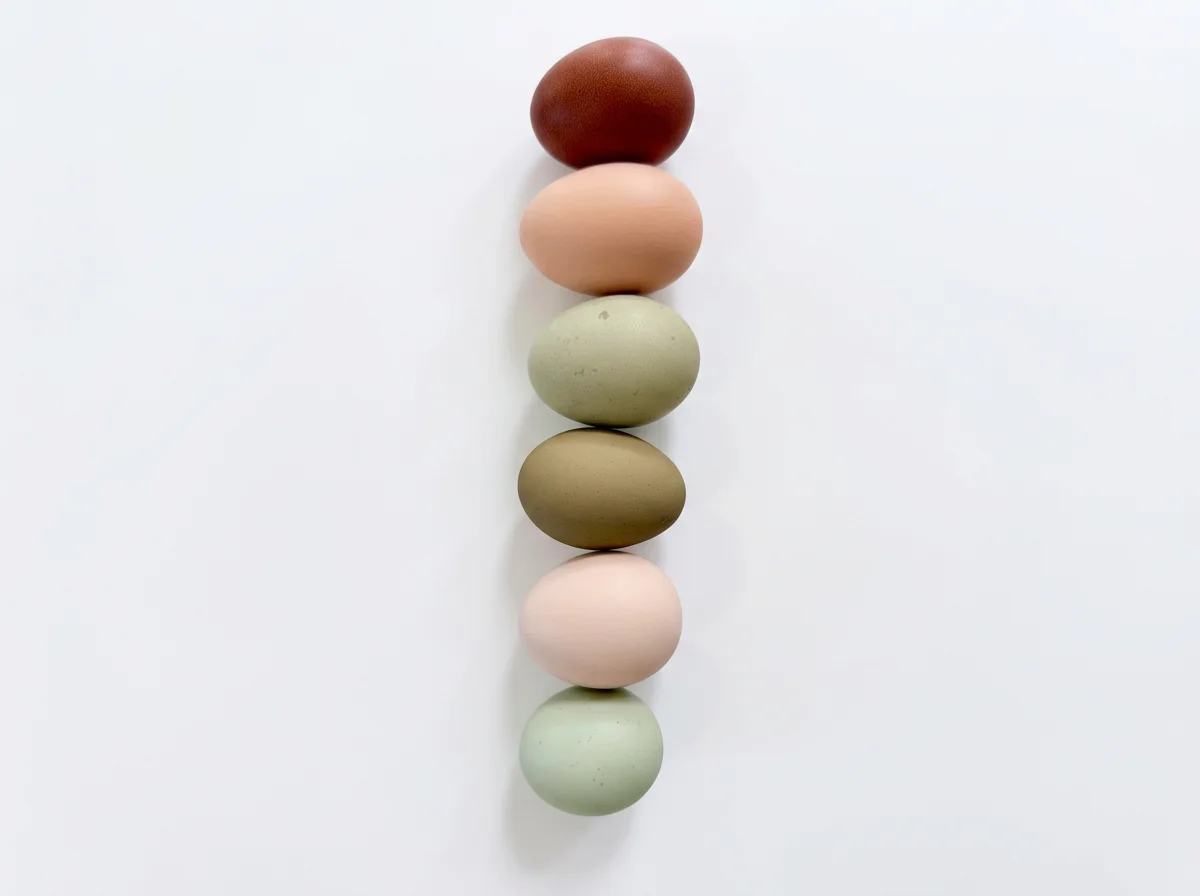
Our flock is more than 50 birds, out on pasture during the day. It's a rainbow flock, so a dozen can hold blue, green, olive, moss, sage, terracotta, khaki, beige and espresso, and now and then a pink or a grey.
Hens lay less in the short days, so subscribers get first call on every dozen.
Eggs, by subscription
$12 a dozen
Rainbow hatching eggs, spring and summer
$50 a dozen
Chicks, hatched to order, straight run, minimum of 3
$15 each
Hatching eggs come from the whole flock, so the colour your hens will lay is a surprise. Chicks are hatched to order, so allow about four weeks: a few days to collect the eggs, then 21 days in the incubator. A 50% deposit holds your hatch. Subscriptions are weekly or every two weeks, paid monthly by e-transfer. Everything is picked up at the farm.